
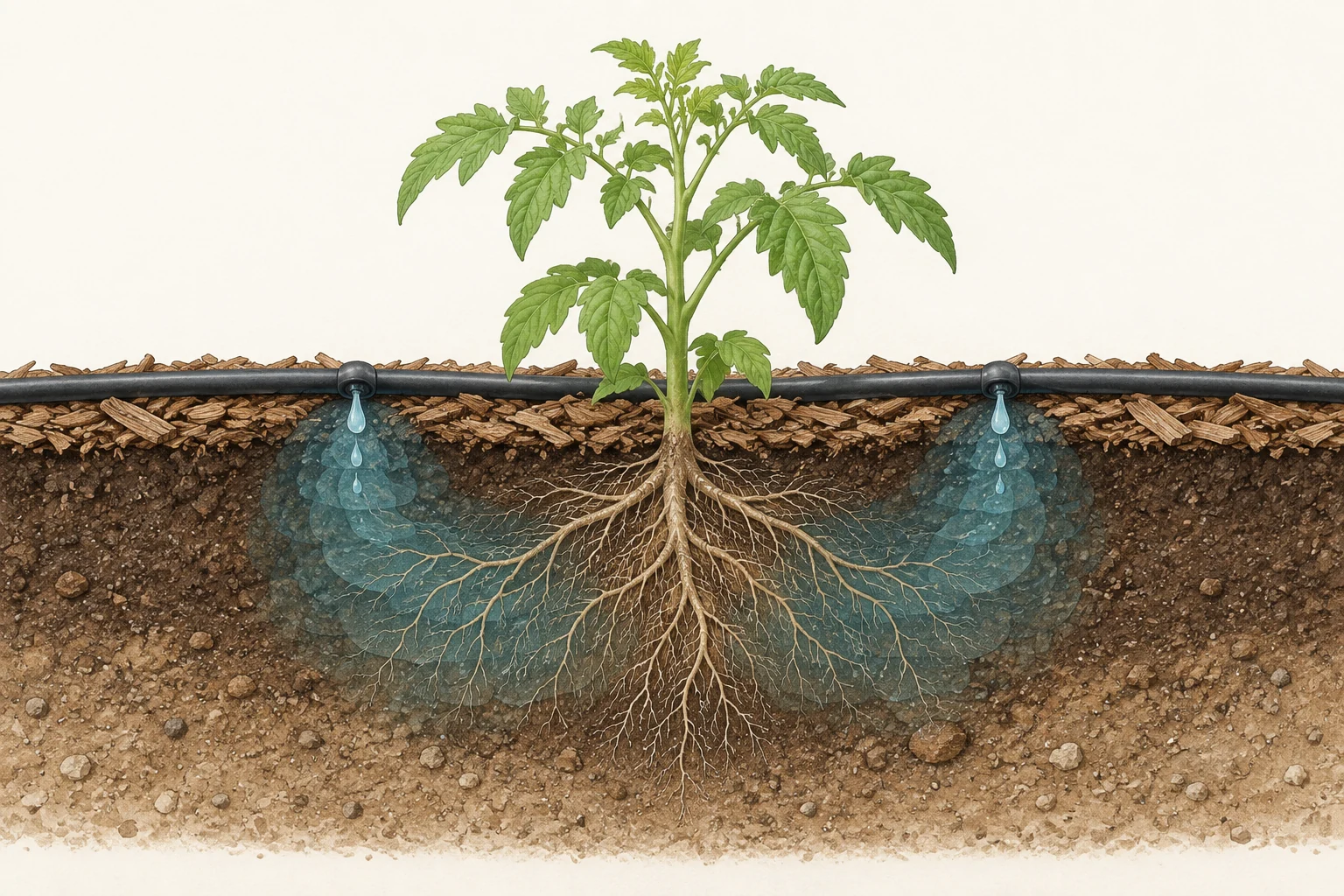
THE IDEA IN PLAIN LANGUAGE
Drip is a delivery method, not a guarantee that a plant receives the right amount of water. Check the root zone and system output before deciding how long to run it.
What’s worth understanding
Source-backed guidance
Tunnel water use changes with ventilation, crop cover and other conditions. Soil moisture observations help guide applications.
Take it into your growing space
- 1
Locate the drip lines in the tunnel model.
- 2
Use the water tool to translate area and depth into volume.
- 3
Observe soil moisture and actual emitter output before scheduling.
THE EASY MISTAKE TO AVOID
A depth-to-gallons conversion is not a crop watering prescription.
Follow the connections
These are editorial learning connections, not claims that one practice scientifically causes another.