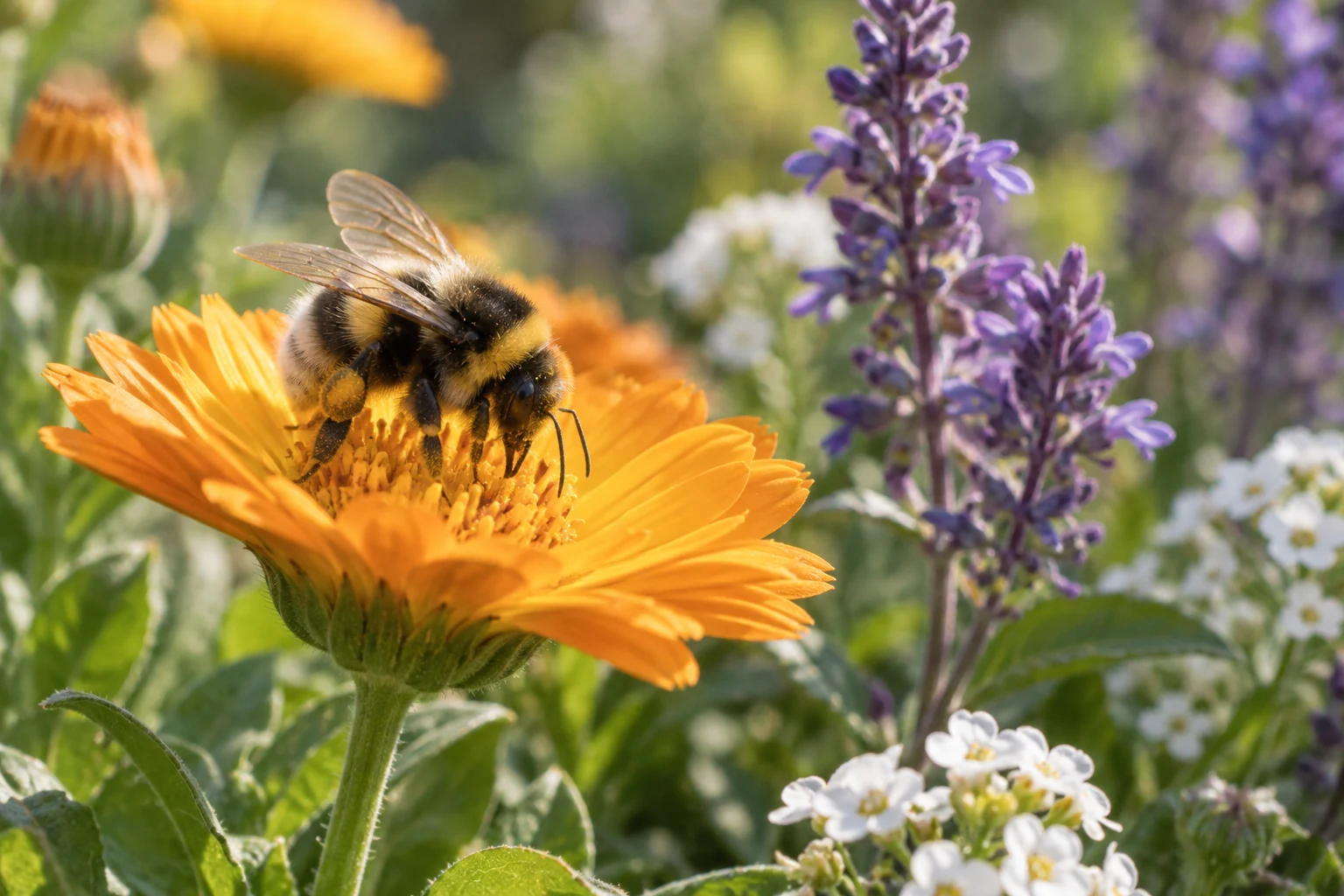
Cucumbers are warm-season vines. The cultivar determines space, fruit type and pollination needs; a high-tunnel production variety is not interchangeable with every garden cucumber.
The cucumbers growing story
Supported vine example. Pollination needs depend on cultivar; a protected-cropping variety may differ from garden types.
01Plan & prepare
An empty bed is a decision, not wasted space.
Choose the crop, usable root space and planting window before sowing.
One useful observationWrite the variety and the part you want to eat.
Explore it in 3D →02Sow & germinate
The first change starts before a leaf is visible.
Germination and emergence are different events; follow seed-specific conditions.
One useful observationRecord sowing and first visible emergence separately.
Explore it in 3D →03Seedling establishment
Small leaves, a small canopy, a growing root system.
Seedlings need suitable light, moisture and room to develop.
One useful observationLook for new true leaves rather than guessing from height.
Explore it in 3D →04Vine & tendrils
A vine can occupy vertical as well as ground space.
A suitable support changes how you manage the vine.
One useful observationCheck access and support before the canopy gets large.
Explore it in 3D →05Flowers & pollination context
Flowers are not interchangeable with finished fruit.
Some cultivars need pollination; others can set fruit without it.
One useful observationRead your cultivar’s pollination notes.
Explore it in 3D →06Fruit enlargement
Look for the developing fruit behind a flower.
Cucumber harvest size depends on intended use and cultivar.
One useful observationChoose fresh slicing or pickling before comparing size.
Explore it in 3D →07Pick & keep checking
Several stages can occur on one vine.
Frequent checking helps find fruit at a usable stage.
One useful observationLook beneath leaves for hidden fruit.
Explore it in 3D →08Post-harvest & next crop
The bed has a history—and another possibility.
Record the harvest and consider sanitation and the next planting.
One useful observationRecord what grew here and one change for the next cycle.
Explore it in 3D →What’s worth understanding
Cucumbers need warm conditions; trellising can help manage vining plants in limited space.
Some protected-cropping cucumber cultivars are parthenocarpic. Their fruit can develop without pollination, so cultivar-specific guidance matters.
Take it into your growing space
- 1
Find the variety and pollination notes on the packet.
- 2
Compare a supported vine with a ground-spreading layout.
- 3
Record flowering and harvest without assuming every flower becomes fruit.
Do not assume every cucumber cultivar requires the same pollination management under cover.
A starting point—not a prescription
The tools use editable example inputs for spacing and timing. Replace them with your seed packet, cultivar, system, and local Extension advice. Days to maturity are not the same as days remaining in your season.
Try this crop in the plannerFollow the connections
These are editorial learning connections, not claims that one practice scientifically causes another.