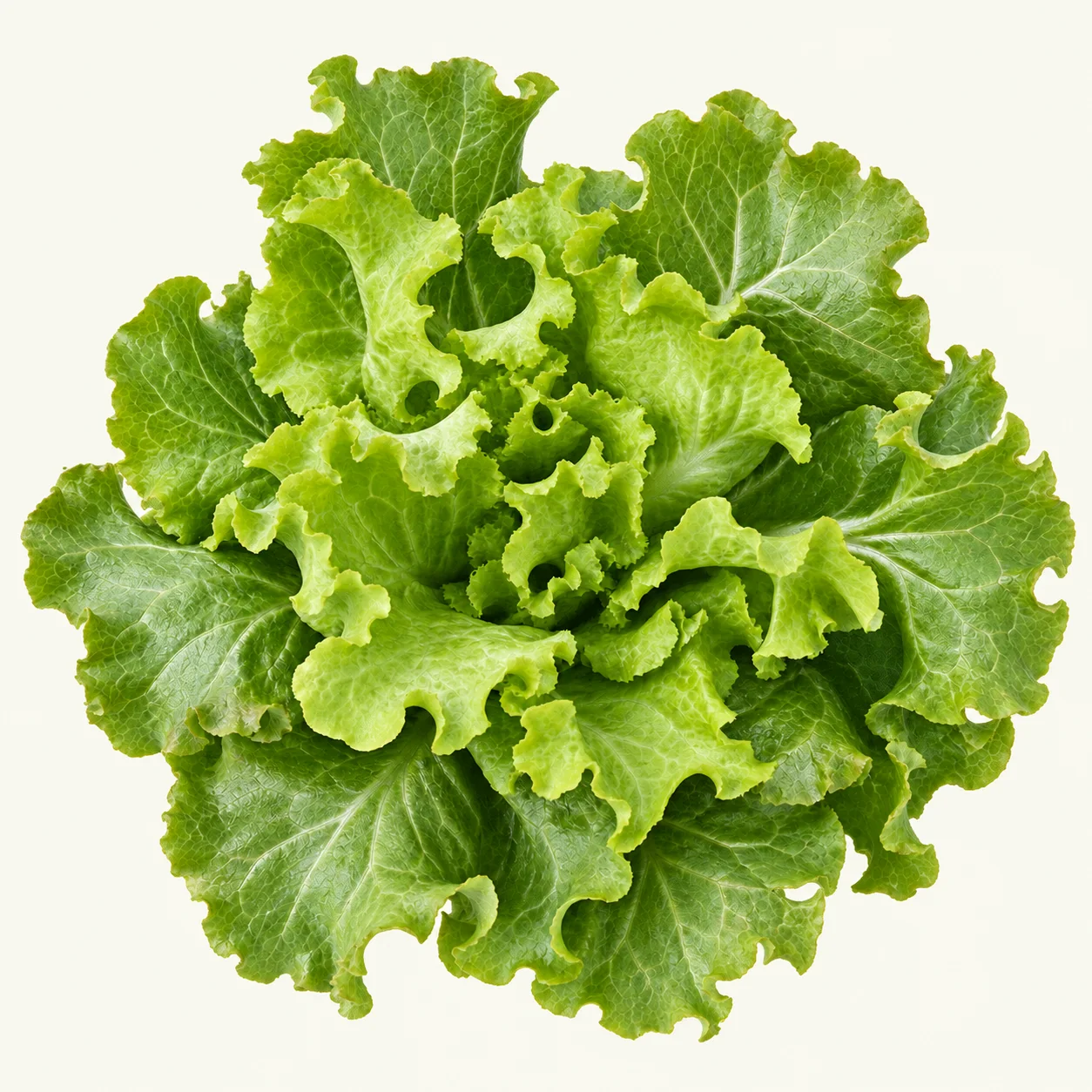
Lettuce is a useful cool-season starting point. Choose a variety and harvest style before choosing spacing: baby leaves and full heads are different growing goals.
The leaf lettuce growing story
Outer-leaf harvest example. Leaf crops do not need to flower before harvest. A whole-head harvest is a different plan.
01Plan & prepare
An empty bed is a decision, not wasted space.
Choose the crop, usable root space and planting window before sowing.
One useful observationWrite the variety and the part you want to eat.
Explore it in 3D →02Sow & germinate
The first change starts before a leaf is visible.
Germination and emergence are different events; follow seed-specific conditions.
One useful observationRecord sowing and first visible emergence separately.
Explore it in 3D →03Seedling establishment
Small leaves, a small canopy, a growing root system.
Seedlings need suitable light, moisture and room to develop.
One useful observationLook for new true leaves rather than guessing from height.
Explore it in 3D →04Build a leaf rosette
The harvestable part is a leaf.
Spacing depends on baby-leaf versus mature-plant goals.
One useful observationChoose the harvest style before final spacing.
Explore it in 3D →05Harvest outer leaves
Keep the younger inner leaves in view.
Outer leaves can be picked while inner leaves continue developing.
One useful observationCompare a picked outer leaf with a younger inner leaf.
Explore it in 3D →06Regrow & reassess
Harvest does not always remove the whole plant.
Heat and long days can lead to bolting and bitter leaves.
One useful observationLook for an elongating central stalk; plan the next sowing.
Explore it in 3D →07Post-harvest & next crop
The bed has a history—and another possibility.
Record the harvest and consider sanitation and the next planting.
One useful observationRecord what grew here and one change for the next cycle.
Explore it in 3D →What’s worth understanding
Minnesota’s fall-planning guide lists leaf lettuce as a cool-season option and notes that it can survive light frost.
Leaf lettuce can be picked progressively from outside leaves while inner leaves continue to grow. Whole-head harvesting is a different approach.
Harvest goal changes spacing. Bolting is a shift toward flowering and can end the useful leaf-harvest window.
Take it into your growing space
- 1
Choose baby leaves or a head-sized harvest.
- 2
Read the packet for spacing and time to maturity.
- 3
Plant a modest batch and record your actual first usable leaves.
Cool-season does not mean every location supports lettuce in every month.
A starting point—not a prescription
The tools use editable example inputs for spacing and timing. Replace them with your seed packet, cultivar, system, and local Extension advice. Days to maturity are not the same as days remaining in your season.
Try this crop in the plannerFollow the connections
These are editorial learning connections, not claims that one practice scientifically causes another.